Obsessive-compulsive disorder · Rockland & Orange County
OCD treatment
If you have been looking for an OCD psychiatrist near you in Rockland or Orange County, Healing Mindz treats obsessive-compulsive disorder with the approaches that have the strongest evidence: exposure and response prevention therapy, medication at the doses OCD actually needs, and, for OCD that has not responded, FDA-cleared deep TMS at our New City office. Evaluations and medication care are also available in Middletown.
- Board-certified psychiatrists
- FDA-cleared TMS
- Most insurance accepted
- Evening & Saturday hours
- Two NY offices
How OCD presents
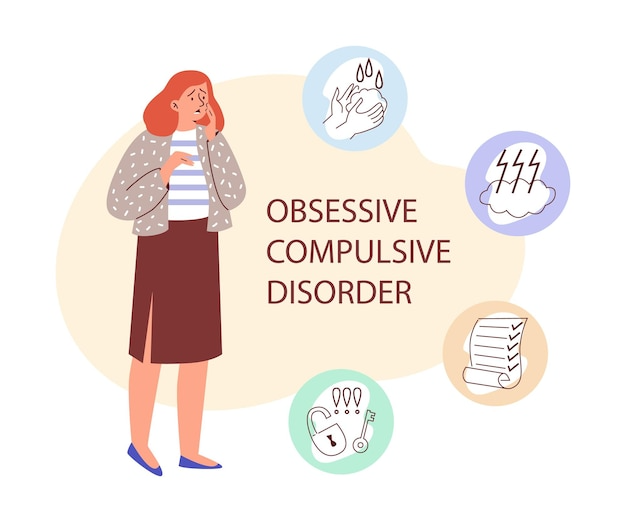
OCD is not a personality quirk or a love of tidiness. The National Institute of Mental Health describes it as a common, long-lasting disorder in which a person has uncontrollable, recurring thoughts (obsessions), repetitive behaviors (compulsions), or both, and feels driven to repeat them. The rituals bring brief relief, but the cycle typically takes up an hour or more a day and causes real distress.
Common obsessions include:
- Fear of germs, contamination or illness
- Unwanted, taboo thoughts about sex, religion or harming someone, which the person finds horrifying
- Fear of having made a terrible mistake, like leaving the stove on or hitting someone while driving
- A need for order, symmetry or things feeling "just right"
Common compulsions include:
- Excessive washing or cleaning
- Repeated checking of locks, appliances or one's own memory
- Counting, arranging or repeating actions a set number of times
- Silent mental rituals, praying or replaying events, and asking others for reassurance
Symptoms often begin in childhood, the teen years or early adulthood and can come and go in intensity. Many people hide OCD for years out of shame about their thoughts. Having an intrusive thought does not mean you want to act on it, and saying it out loud to a clinician is one of the first steps of treatment.
How an OCD psychiatrist evaluates you
At your first visit, a board-certified psychiatrist or psychiatric nurse practitioner asks about the specific obsessions and rituals you experience, how much time they take, what you avoid, and how they affect work, school and family life. Many clinicians use the Yale-Brown Obsessive Compulsive Scale (Y-BOCS) to rate severity, which also gives a baseline to measure progress against.
We also look for conditions that frequently travel with OCD, such as depression, other anxiety disorders, tic disorders and body-focused repetitive behaviors, and we review every medication you have tried, including the dose and how long you took it. That last detail matters: many people who were told a medication "didn't work" for OCD never reached a full dose for long enough.
OCD treatment options we offer
Exposure and response prevention (ERP). ERP is a form of cognitive behavioral therapy and is considered a first-line treatment for OCD. With a therapist, you gradually face the thoughts, images or situations that trigger anxiety, starting with easier steps, while practicing not doing the ritual. Over time the brain learns that the feared outcome doesn't happen, or that the discomfort passes on its own. It is hard work, but it targets the cycle directly.
SSRIs, at OCD doses. Selective serotonin reuptake inhibitors such as fluoxetine, fluvoxamine, sertraline and paroxetine are FDA-approved for OCD. OCD usually needs higher doses than depression, and improvement is slower: the American Psychiatric Association's practice guideline recommends an adequate trial of 8 to 12 weeks, with at least several weeks at a full dose, before judging whether a medication is working. We raise doses gradually and watch for side effects along the way.
Clomipramine. Clomipramine, an older tricyclic medication, was the first drug FDA-approved for OCD. It can be very effective, but it has more side effects than SSRIs (such as dry mouth, constipation, drowsiness and effects on heart rhythm), so it is usually considered after SSRI trials, with an ECG and careful dosing.
Combining treatments. For moderate to severe OCD, medication plus ERP is often more helpful than either alone. When response is partial, a psychiatrist may add a second medication. All of this is coordinated through our medication management service.
Family, reassurance and living with OCD between visits
OCD rarely affects just one person. Partners and parents often get pulled into rituals without meaning to: answering the same reassurance question again and again, checking the door on someone's behalf, or rearranging routines so a trigger is avoided. Clinicians call this family accommodation. It comes from love, but it can keep the cycle going.
With your permission, we can include a family member in a visit to explain how OCD works and how to step back from rituals gradually and kindly, rather than all at once. For teenagers, this is often a core part of care. Between appointments, keeping a simple log of triggers, urges and what you did instead gives your clinician far more to work with than memory alone. If OCD thoughts ever turn into thoughts of harming yourself, or depression deepens, call us or call or text 988 right away.
Deep TMS: an FDA-cleared option for OCD
In 2018 the FDA cleared a deep transcranial magnetic stimulation system (made by BrainsWay) as an add-on treatment for adults with OCD, based on a randomized, sham-controlled trial. TMS uses magnetic pulses to stimulate specific brain circuits; it doesn't require anesthesia, and you are awake and can drive yourself home. It is generally considered for people whose OCD has not improved enough with medication and therapy.
TMS for OCD is offered at our New City office under psychiatrist supervision. A course typically involves sessions five days a week over several weeks, and OCD protocols usually include a brief, personalized symptom provocation at the start of each session. See TMS for OCD for protocol details, who qualifies and insurance considerations. Patients in Orange County can have a TMS consultation in Middletown.
What an OCD plan looks like over 8–12 weeks
- Weeks 0–2: Evaluation and baseline severity score. Together we decide on ERP, medication or both, and you start noticing and writing down triggers and rituals.
- Weeks 2–6: ERP sessions build an exposure ladder, from milder triggers upward, with practice between sessions. If you are on an SSRI, the dose is raised step by step toward an OCD-range dose as tolerated.
- Weeks 6–12: Exposures move to harder items. Severity is re-rated and compared with your baseline. If progress is limited after a full-dose trial, we discuss switching medication, adding a second one, clomipramine or a TMS consultation.
Available at both offices and by telehealth
Video follow-up visits are available anywhere in New York State.
New City office (Rockland County)
Healing Mindz by Dr. Singh216 Congers Road, Suite 302
New City, NY 10956
(845) 480-6678
- Psychiatric evaluations
- Medication management
- Therapy
- TMS therapy (all TMS treatment is delivered here)
- Telehealth follow-ups
Middletown office (Orange County)
Healing Mindz by Dr. Singh60 Prospect Ave, Third Floor
Middletown, NY 10940
(845) 480-6678
- Psychiatric evaluations
- Medication management
- Therapy
- TMS consultations (treatment takes place in New City)
- Telehealth follow-ups
Insurance accepted
We are in-network with most major plans, including Aetna, Cigna, UnitedHealthcare / Optum, Empire BlueCross BlueShield, MVP Health Care, and Medicare. We check your benefits before your first visit so you know what to expect.
See every plan we accept →Frequently asked questions
What is the most effective treatment for OCD?
Exposure and response prevention therapy and SSRI medication are both first-line treatments, and many people do best with both. For OCD that does not respond enough, options include clomipramine, medication combinations and FDA-cleared deep TMS.
Why does OCD need higher medication doses?
Studies and guidelines show that OCD often responds to SSRIs at higher doses than depression does, and it takes longer: an adequate trial is usually 8 to 12 weeks, including several weeks at a full dose.
Is TMS FDA-cleared for OCD?
Yes. The FDA cleared a deep TMS system for adults with OCD in 2018 as an add-on treatment. We offer TMS at our New City office, and consultations at both offices.
Do you offer ERP therapy?
Our clinicians can provide therapy alongside medication care, and we will help connect you with ERP if a specialized therapist is a better fit for your situation.
Is OCD treatment covered by insurance?
Psychiatric evaluation and medication management for OCD are covered by most plans we accept. TMS coverage depends on the plan and usually needs prior authorization; we verify benefits before your first visit.
Sources
- National Institute of Mental Health — Obsessive-Compulsive Disorder
- FDA — FDA permits marketing of transcranial magnetic stimulation for treatment of OCD (2018)
- American Psychiatric Association — What Is Obsessive-Compulsive Disorder?
- American Psychiatric Association — Clinical Practice Guidelines
This page is general information, not medical advice. If you are in crisis, call or text 988 or call 911.
Ready to talk to a psychiatrist?
New patients are welcome at both offices, and appointments are often available within the week.