Comparing TMS vs antidepressants usually starts with a frustrating experience: you took the pills, you waited the weeks, maybe you tried a second or third one, and you still do not feel like yourself. You may be wondering whether something other than medication could help, or whether you simply have not found the right prescription yet.
Both can be true. Antidepressants remain a first-line treatment for depression, and many people do find relief with them, sometimes after a dose change or a switch. Transcranial magnetic stimulation (TMS) is a different kind of treatment that is usually considered when medications have not been effective or have not been tolerated. This article explains how they differ, where each one fits, and how a psychiatrist decides between them, or combines them.
How antidepressants and TMS work differently
Antidepressants are taken by mouth and travel through the whole body. They act on brain chemistry over time, and the National Institute of Mental Health notes that they can take several weeks to reach their full effect. Because they circulate everywhere, side effects can show up in places that have nothing to do with mood, such as digestion, sleep, weight or sexual function.
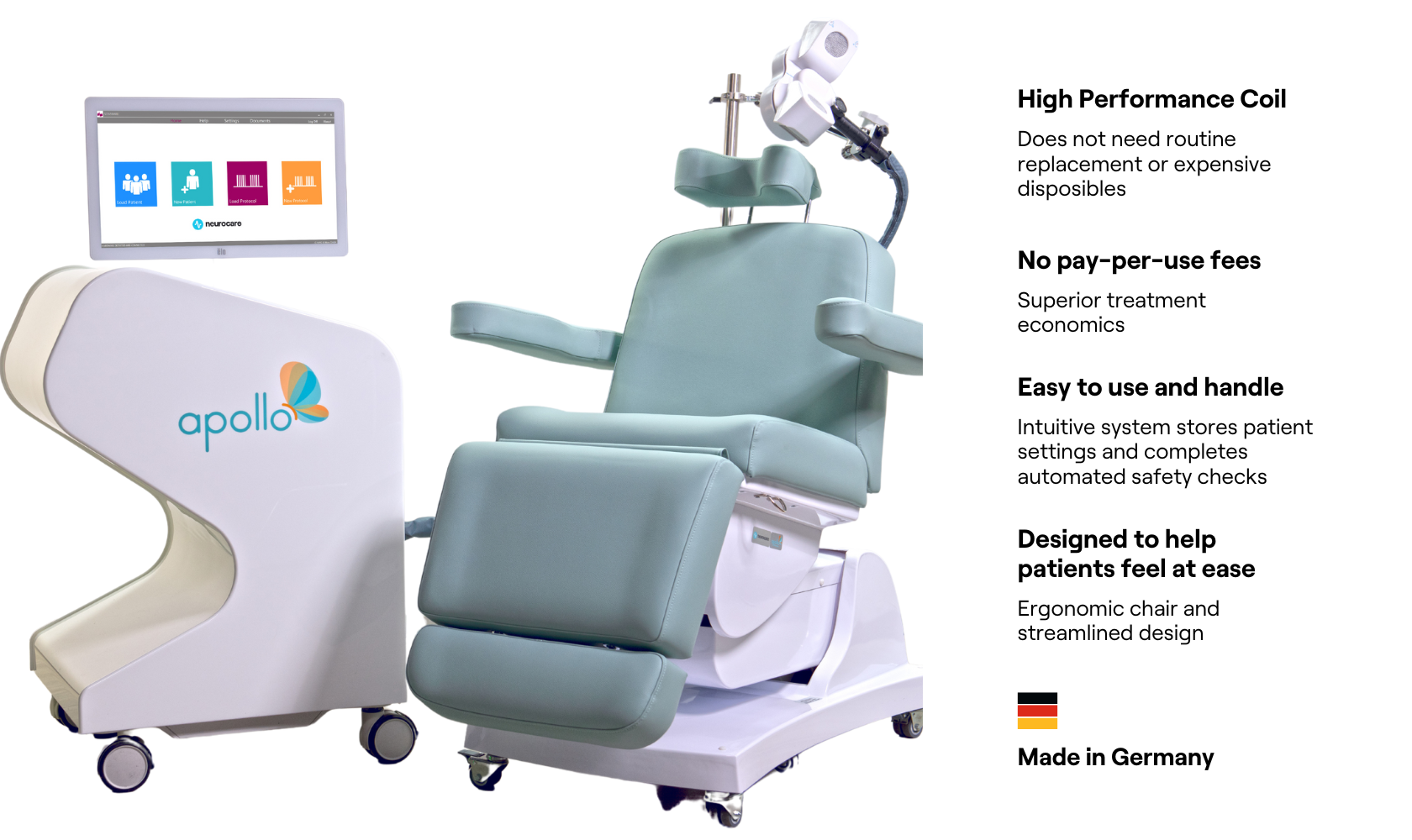
TMS works locally. A magnetic coil placed against the scalp sends brief magnetic pulses to a specific area of the brain involved in mood regulation. NIMH describes it as a noninvasive procedure that does not require anesthesia. You are awake throughout, and you can return to normal activities, including driving, right afterward.
So the core difference is not "natural vs chemical." It is systemic vs targeted, and daily pill vs a scheduled course of office visits.
TMS vs antidepressants at a glance
| Antidepressants | TMS | |
|---|---|---|
| How it is given | Pill taken daily at home | Magnetic pulses delivered in the office |
| Where it acts | Throughout the body | A targeted brain region |
| Typical time commitment | A few minutes a day, ongoing | About 20 to 40 minutes per session, 5 days a week for roughly 4 to 6 weeks |
| Common side effects | Can include nausea, sleep changes, weight changes or sexual side effects | Most often scalp discomfort or headache at the treatment site |
| Anesthesia or downtime | None | None; you drive yourself home |
| When it is usually used | Often a first-line treatment | Usually after medications have not helped enough or were not tolerated |
| Can they be combined? | Yes | Yes, many patients continue medication during TMS |
The table is a simplification. Individual medications differ a great deal from one another, and so do individual responses.
If medication has already let you down more than once, our TMS therapy page explains how a TMS course is set up at Healing Mindz in New City and who is typically a good candidate.
When "medication hasn't worked" really means it
Before moving on from medication, a good psychiatrist asks whether the medication actually had a fair chance. A few common reasons an antidepressant seems to fail:
- The dose was too low or was never adjusted after the starting dose.
- The trial was too short. Stopping after two weeks often does not give the medicine time to work.
- Side effects made it hard to take consistently, which is understandable but changes the picture.
- The diagnosis needs another look. Bipolar depression, for example, is treated differently than unipolar depression. Thyroid problems, sleep disorders and substance use can also keep depression going.
- Something is missing from the plan, such as psychotherapy, which the American Psychiatric Association describes as an effective treatment on its own or alongside medication.
This is why a fresh psychiatric evaluation is often the most useful first step. It can confirm the diagnosis, map out exactly what you have tried, and identify whether there is a medication strategy still worth trying through medication management.
When two or more adequate antidepressant trials have not brought enough relief, clinicians often use the term treatment-resistant depression. That is the point where TMS commonly enters the conversation, and it is also the point where many insurance plans begin to consider TMS medically necessary.
Who may lean toward TMS
TMS may be a reasonable option to discuss if:
- You have tried several antidepressants without enough improvement
- Medication side effects have been hard to live with
- You would prefer a treatment that does not add another daily pill
- You can commit to daily weekday visits for several weeks
TMS is not for everyone. People with certain metal implants or devices in or near the head may not be candidates, and a history of seizures needs careful review. The FDA clearance for depression applies to adults with major depressive disorder, with a more recent clearance for one device in adolescents 15 to 21.
Who may lean toward staying with medication
Medication may remain the better fit if:
- You have only tried one antidepressant, or a trial was cut short
- Your depression is mild to moderate and responded partly to treatment
- A daily, weekday-office schedule is not realistic for you right now
- Your psychiatrist sees a clear next medication step, such as a dose change, a switch, or adding a second medication
There is no prize for choosing one path over the other. The goal is the plan that gives you the best chance of feeling better, with side effects you can live with.
Using both together
TMS and antidepressants are not opposites. Many people continue their medication through a TMS course, and your psychiatrist will review your current medicines before you begin. Some medications affect seizure threshold, so it matters that any change during treatment is discussed with the physician supervising your TMS. After a course, some patients keep taking medication to help maintain gains, while others work with their psychiatrist to adjust it.
Therapy fits alongside both. Learning skills to manage negative thinking, sleep and stress can support whatever biological treatment you choose.
What to bring to the conversation
Whichever way you lean, the decision is easier with a clear record of what you have already tried. Before your appointment, it helps to jot down:
- Each antidepressant you have taken, the highest dose, and roughly how long you took it
- Why you stopped each one: not enough benefit, side effects, cost or something else
- Any other medications or supplements you take now
- Past therapy, including the type and how long it lasted
- Any history of seizures, head injury, or metal implants in or near the head
If you cannot remember the details, your pharmacy can usually print a medication history. This list does double duty. It helps your psychiatrist judge whether medication has had a fair trial, and if TMS turns out to be the next step, it is exactly the information most insurance plans ask for during prior authorization.
What the decision looks like at Healing Mindz
At Healing Mindz, TMS is psychiatrist-supervised, with the same physician following you from your consultation through the end of your course. Treatment is delivered at the New City office in Rockland County. If you live in Orange County, you can have your TMS consultation at the Middletown office and complete sessions in New City.
You can also learn more about the broader picture on our depression treatment page, including therapy and medication options.
If medication has not given you your life back, that is not a personal failure, and it does not mean you are out of options. It means it is time for a clear-eyed review of what has been tried and what comes next.