If you are searching for TMS in Rockland County, you have probably noticed that programs describe themselves in very similar language, which makes it hard to tell what actually differs. Transcranial magnetic stimulation is a commitment of several weeks of near-daily visits, so it is worth spending an hour asking good questions before you start. This guide gives you those questions, explains why each one matters, and describes what a clear answer tends to sound like.
We are a psychiatry practice that offers TMS in New City, so we have an obvious interest here. That is exactly why this article does not compare named clinics. The questions below are ones we think every patient should ask every provider, including us.
Why the Provider Matters as Much as the Treatment
TMS is an established treatment. The U.S. Food and Drug Administration first cleared a TMS device for major depressive disorder in 2008, and the National Institute of Mental Health describes it as a noninvasive option that is often considered when depression has not improved enough with other treatments. But a device is only one part of care. Someone has to confirm the diagnosis, decide whether you are a safe candidate, select a protocol, find the right treatment location and intensity on your head, watch for side effects, and adjust your plan as weeks go by.
Those decisions are clinical, and they are made by people. The way a program is staffed and organized shapes your experience every single day of a course that typically runs 30 or more sessions.
TMS Rockland County: The Questions to Ask
Before you call around, you may find it useful to look at how we set up TMS in Rockland County, so you have one concrete example to compare against.
Then use the table below with any provider you are considering. Write down the answers; after two or three calls, the differences become much easier to see.
| Question to ask | Why it matters | What a clear answer sounds like |
|---|---|---|
| Who supervises my treatment, and is that person a psychiatrist? | Candidacy, dosing and safety decisions are medical judgments. | A named physician who evaluates you, sets your plan and stays involved through the course. |
| Who delivers the daily sessions? | Trained technicians often run sessions; you want to know who is on-site and how quickly a physician can be reached. | A clear description of staff roles and how concerns reach the supervising physician the same day. |
| Which device and protocol will I be treated with? | Devices are FDA-cleared for specific indications, and protocols differ in session length and schedule. | The device name, its cleared indication for your condition, and the protocol, offered without hesitation. |
| How is my treatment location and intensity determined? | Proper targeting and dosing are part of safe, consistent treatment. | An explanation of the mapping or measurement done at the first session and when it is rechecked. |
| What hours are available for daily sessions? | You will need the same window five days a week for four to six weeks. | Specific open times, including any early, evening or weekend slots. |
| How do you handle insurance and prior authorization? | Most plans require approval before TMS starts, and the paperwork takes time. | Who verifies benefits, who submits the request, and how you will hear about the result. |
| How do you track whether it is working? | Progress should be measured, not guessed. | Regular symptom rating scales and scheduled check-ins with the physician. |
| What happens after the course ends? | Follow-up care affects how gains are maintained. | A plan for ongoing medication management, therapy or follow-up visits. |
How We Would Answer Those Questions
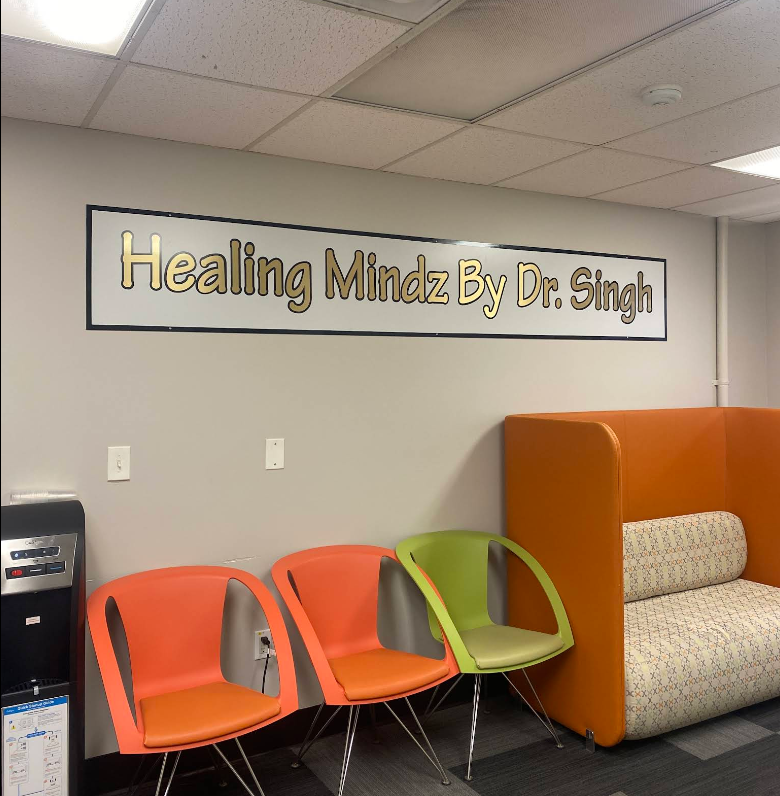
For transparency, here is how Healing Mindz approaches each point. Our TMS program is psychiatrist-supervised, and the same physician follows you from your initial evaluation through the end of your course. Before your first session, your physician reviews your history, current medications and safety screening.
All treatment sessions take place at our New City office at 216 Congers Road, Suite 302, which has free on-site parking. The office is open Monday 10:30 a.m. to 7 p.m., Tuesday noon to 7 p.m., Wednesday 9 a.m. to 4 p.m., Thursday noon to 5 p.m., and Friday and Saturday 9 a.m. to 1 p.m.
On the device question: please ask us directly which device and protocol you will be treated with. We would rather tell you in person, in the context of your diagnosis and plan, than publish a general claim. You should get a specific answer from any provider you are considering.
On insurance, our team verifies your benefits before your first visit, and our TMS program is credentialed with Optum Behavioral Health. Coverage rules differ by plan, so the details are covered on our TMS cost and insurance page and the general insurance page.
Location and Logistics in Rockland County
Because TMS is a daily commitment, a short, predictable drive makes a real difference. Our New City office is a central location for many Rockland communities, and we have short guides for patients coming from Nanuet, Spring Valley, Pearl River and Nyack, among others. When comparing providers, consider the drive at the time of day you would actually travel, not at midday on a weekend.
Parking, elevator access and waiting-room comfort sound minor, but you will experience them 30 or more times. It is reasonable to ask about them.
Signs You Should Ask More Questions
Be cautious if a program cannot tell you who your physician is, cannot name the device or protocol, promises a specific result, or pressures you to commit before your insurance is verified. TMS can help many people, but no ethical provider can guarantee that it will work for you. Response varies, and an honest program will say so.
It is also fair to ask whether a provider has evaluated your diagnosis carefully. TMS is FDA-cleared for specific conditions; it is not a general wellness treatment. If you have not had a recent psychiatric evaluation, a good provider will want one before recommending treatment.
Questions to Ask Yourself, Too
Choosing well is not only about the provider. Before you commit, ask yourself a few honest questions. Can I protect the same time slot most weekdays for about six weeks? Do I have a backup plan for childcare, work coverage or transportation on hard days? Am I willing to report side effects and mood changes honestly, even when it feels easier to say everything is fine? Is there someone in my life who knows I am starting treatment and can check in with me?
None of these need perfect answers. They simply help you see where you may need support, so you can ask the provider about it up front. A good team will help you problem-solve scheduling and logistics rather than leaving you to figure it out alone, and they will want to know about anything that might make completing the course harder.
Making Your Decision
Choosing a TMS provider is not about finding the most impressive website. It is about finding a team that knows your history, answers questions directly, and fits your weekly life well enough that you can complete the full course. Take notes, compare answers, and trust your sense of who listened to you.
If you would like to start with us, call (845) 480-6678 to arrange an evaluation with a psychiatrist. We will answer every question in the table above, including which device and protocol you would be treated with.