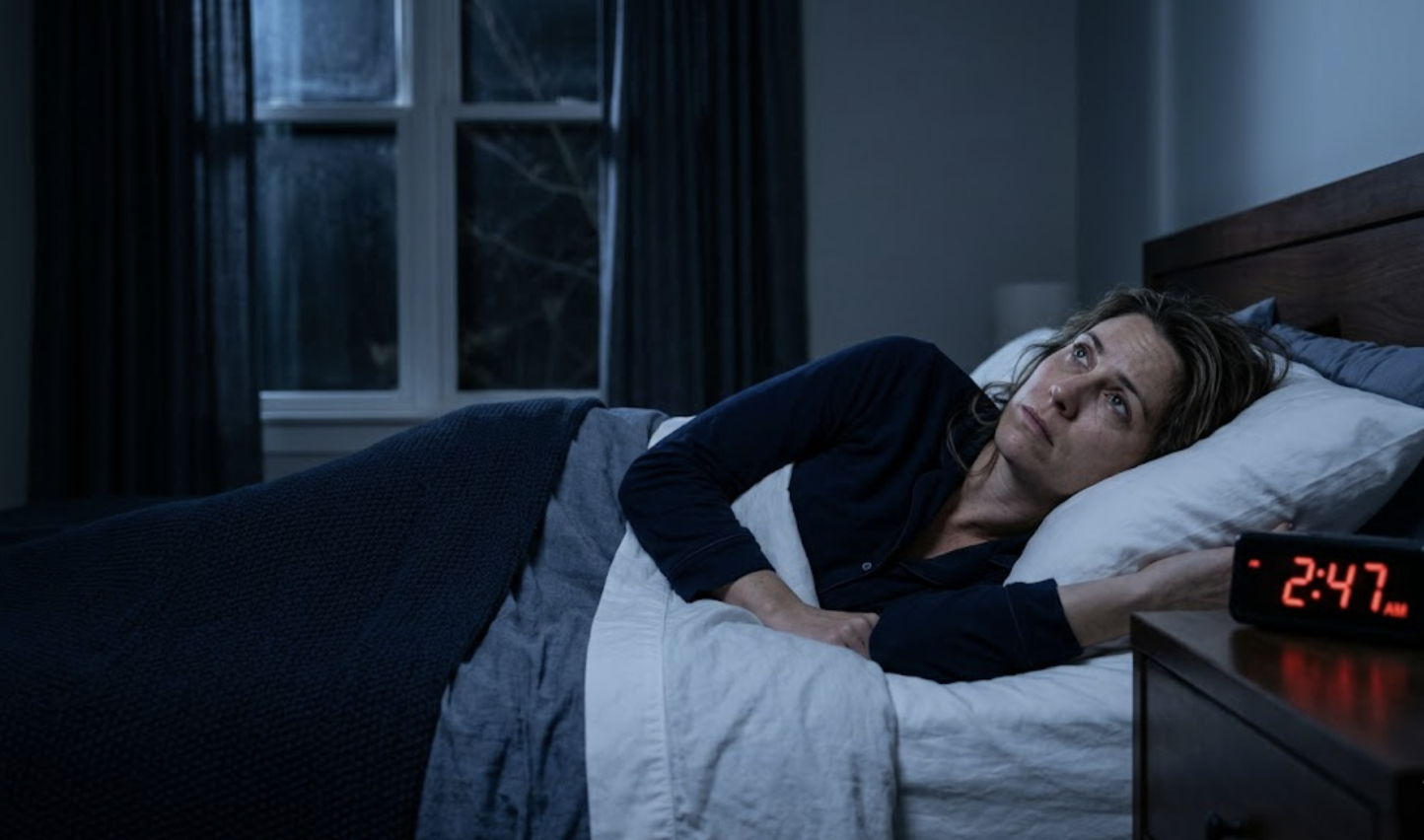
It is 2 a.m. You are staring at the ceiling, exhausted but completely unable to fall asleep. Your mind is racing through tomorrow's to-do list, last week's conversation that did not go quite right, or worries about things you cannot even fully name. You finally drift off around 4 a.m., only to wake up two hours later feeling like you never slept at all. And the next night, it happens again.
If this sounds familiar, you have probably already tried the standard advice: no screens before bed, a cooler room, chamomile tea, melatonin gummies, a consistent bedtime. Maybe some of it helped a little. But the core problem — the racing mind, the inability to switch off, the dread of bedtime itself — never actually went away.
Here is what most people do not realize: chronic insomnia is rarely just a sleep problem. In a significant number of cases, it is one of the clearest, earliest, and most overlooked signs of an underlying anxiety disorder or depression. At Healing Mindz, Dr. Singh, a Board-Certified Psychiatrist serving Middletown, New City, Rockland County, and across the Hudson Valley, helps patients understand the real reason they cannot sleep — and provides evidence-based psychiatric treatment that addresses the root cause, not just the symptom.
Why Sleep and Mental Health Are Inseparable
Sleep is not simply something the body does when the mind is quiet. It is an active neurological process governed by some of the very same brain regions and neurotransmitter systems involved in mood and anxiety regulation — particularly serotonin, norepinephrine, GABA, and cortisol.
This is why the relationship between sleep and mental health runs in both directions. Anxiety and depression disrupt sleep. And disrupted sleep, in turn, worsens anxiety and depression — creating a self-reinforcing cycle that becomes progressively harder to break the longer it continues.
Research consistently shows that insomnia is not just a symptom that accompanies psychiatric conditions — it is often a predictive one. Chronic insomnia frequently precedes the onset of major depressive episodes and generalized anxiety disorder by months or even years, meaning that the sleepless nights many people dismiss as "just stress" can actually be the earliest warning sign of a developing mental health condition.
The Three Faces of Sleepless Nights: Which One Is Yours?
Not all insomnia looks the same — and the pattern of your sleep disruption often points toward a specific underlying cause.
"I Can't Turn My Brain Off" — Anxiety-Driven Insomnia
If your primary struggle is falling asleep — lying in bed with a racing mind, rehearsing conversations, anticipating tomorrow's problems, or feeling physically wired despite being exhausted — this pattern strongly suggests anxiety as the underlying driver.
Anxiety activates the body's sympathetic nervous system — the same "fight or flight" response triggered by genuine danger — even when you are lying safely in your own bed. Elevated cortisol and adrenaline make it neurologically very difficult to downshift into the relaxed state sleep requires. Common features include:
- Significant difficulty falling asleep despite feeling tired
- Racing or looping thoughts that intensify specifically at bedtime
- Physical tension — clenched jaw, tight chest, restless legs
- A sense of dread or anxiety about bedtime itself, sometimes called "sleep anxiety"
- Frequent checking of the clock, which often increases anxiety further
"I Wake Up at 3 a.m. and Can't Get Back to Sleep" — Depression-Driven Insomnia
If your primary struggle is staying asleep — particularly waking in the early morning hours (often between 2 and 4 a.m.) and being unable to fall back asleep, accompanied by a flat, heavy, or hopeless mood — this pattern is classically associated with depression.
This phenomenon, known clinically as early morning awakening, is one of the most recognized sleep signatures of major depressive disorder. It is thought to be related to disruptions in the body's circadian rhythm and cortisol regulation that occur in depression. Common features include:
- Waking significantly earlier than intended and being unable to return to sleep
- A heavy, exhausted feeling upon waking that does not improve with more time in bed
- Diminished motivation to get up, even after waking
- Sleeping excessively at other times (in atypical depression) as a contrasting pattern
- A general sense that sleep is unrefreshing, regardless of duration
"I'm Exhausted but Wired" — Mixed Anxiety-Depression Insomnia
Many patients experience a combination of both patterns: difficulty falling asleep due to racing thoughts, followed by fragmented, restless sleep, followed by early waking and an inability to return to sleep. This mixed presentation is common in patients with co-occurring anxiety and depression, and it often produces the most severe daytime impairment, since virtually no stage of the sleep cycle is functioning normally.
Why "Just Try Melatonin" Does Not Fix the Real Problem
It is completely understandable to reach for over-the-counter sleep aids, melatonin, or sleep hygiene tips first — and for mild, situational sleep disruption, these strategies genuinely can help. But when insomnia has become chronic — persisting for weeks or months — and is accompanied by anxiety, low mood, or significant daytime impairment, these surface-level interventions almost always fall short, for one simple reason: they do not address what is actually keeping your brain awake.
Melatonin regulates the timing of your sleep-wake cycle. It does nothing to quiet a nervous system stuck in anxious hyperarousal, and it does nothing to correct the neurochemical changes underlying depression. This is why so many patients report trying melatonin, magnesium, sleep teas, and white noise machines for months, with only marginal or temporary improvement — the underlying psychiatric driver was never actually treated.
When Insomnia Signals It Is Time to See a Psychiatrist
Occasional sleeplessness — before a big presentation, during a stressful week — is a normal part of life and usually resolves on its own. But certain patterns indicate that something more significant is happening and warrant a comprehensive psychiatric evaluation:
- Your sleep difficulties have persisted for more than three weeks, occurring most nights
- You feel anxious, dread, or physically tense specifically about going to bed
- You regularly wake in the early morning hours and cannot return to sleep
- Your sleep problems are accompanied by low mood, loss of interest in things you used to enjoy, or feelings of hopelessness
- You find yourself worrying excessively — about sleep itself, or about unrelated areas of your life — once you are in bed
- Daytime sleepiness, irritability, or difficulty concentrating is significantly affecting your work, relationships, or safety (for example, while driving)
- You have tried over-the-counter sleep aids, sleep hygiene changes, or short-term solutions without lasting improvement
- You have started relying on alcohol or other substances to fall asleep
If several of these apply to you, your sleep problem is very likely a symptom of an underlying, treatable psychiatric condition — not a standalone issue that better sleep hygiene alone will resolve.
How Dr. Singh Evaluates Insomnia at Healing Mindz
At Healing Mindz, insomnia is never treated as an isolated complaint to be silenced with a sleeping pill. Dr. Singh conducts a comprehensive psychiatric evaluation specifically designed to uncover what is actually disrupting your sleep, including:
Detailed sleep history — When did the sleep problems begin? What does a typical night actually look like? Is the difficulty falling asleep, staying asleep, or both? Understanding the precise pattern is clinically essential.
Full psychiatric assessment — A thorough evaluation for underlying anxiety disorders, depression, and other psychiatric conditions that may be driving your sleep disruption, since effective treatment depends entirely on identifying the true root cause.
Review of contributing factors — Caffeine and alcohol use, medication side effects, screen exposure, work schedule, and other lifestyle factors that may be compounding the problem.
Screening for other sleep disorders — Conditions like sleep apnea or restless leg syndrome can mimic or worsen insomnia and may require additional medical evaluation or referral.
Assessment of safety and severity — Including screening for any thoughts of self-harm, since severe insomnia combined with depression can increase risk and requires careful, immediate attention.
This thorough evaluation ensures that your treatment plan addresses the actual cause of your sleeplessness — not just the symptom that brought you in the door.
Evidence-Based Treatment for Insomnia at Healing Mindz
Cognitive Behavioral Therapy for Insomnia (CBT-I)
CBT-I is considered the gold-standard, first-line treatment for chronic insomnia — including insomnia connected to anxiety and depression — and is strongly recommended by sleep medicine guidelines ahead of long-term medication use. CBT-I works by directly targeting the thought patterns and behaviors that perpetuate insomnia, including:
- Identifying and restructuring anxious or catastrophic thoughts about sleep ("If I don't sleep tonight, tomorrow will be a disaster")
- Sleep restriction therapy, which paradoxically improves sleep quality by temporarily limiting time in bed to consolidate sleep
- Stimulus control techniques that rebuild the brain's association between bed and sleep, rather than bed and wakeful frustration
- Relaxation training to reduce the physical hyperarousal that keeps anxious patients awake
When insomnia is connected to underlying anxiety or depression, CBT-I is often integrated with broader psychotherapy addressing those root conditions directly — since treating the anxiety or depression itself is frequently what produces lasting improvement in sleep.
Treating the Underlying Anxiety or Depression
For most patients with chronic insomnia, the most effective long-term path forward is treating the anxiety or depression actually driving the sleep disruption — through psychotherapy, medication management, or both. As the underlying condition improves, sleep very often improves alongside it, without ever needing to be treated as a separate problem.
This is the central insight that distinguishes psychiatric care from generic sleep aids: fix the racing mind, and the racing mind stops keeping you awake.
Medication Management
When appropriate, Dr. Singh may incorporate medication as part of a comprehensive treatment plan — which may include carefully selected antidepressants or anti-anxiety medications that also support sleep, rather than reaching first for sedative-hypnotic sleep medications that treat the symptom without addressing the cause. Every medication decision is made collaboratively, with a full discussion of benefits, risks, and realistic expectations.
Transcranial Magnetic Stimulation (TMS)
For patients whose insomnia is driven by treatment-resistant depression or anxiety — conditions that have not responded adequately to therapy and medication — Healing Mindz offers TMS, an FDA-approved, non-invasive treatment that targets the underlying brain activity patterns associated with depression and anxiety. As these underlying conditions improve through TMS, many patients experience meaningful, lasting improvement in their sleep as well.
Insomnia Treatment Near You — Middletown, New City & Hudson Valley, NY
Chronic sleeplessness should never be something you simply learn to live with. Healing Mindz brings comprehensive, psychiatrist-led insomnia evaluation and treatment directly to communities across Orange County and Rockland County.
Whether you are in Middletown, New City, Suffern, Spring Valley, Goshen, Monroe, Newburgh, or anywhere across the Hudson Valley, Dr. Singh offers:
- Comprehensive psychiatric evaluation to identify the true cause of your insomnia
- CBT-I and integrated psychotherapy for anxiety- and depression-related sleep disruption
- Precision medication management when clinically appropriate
- FDA-approved TMS for treatment-resistant depression and anxiety underlying chronic sleep problems
- Telehealth psychiatric appointments available statewide across New York and California
Frequently Asked Questions: Insomnia, Anxiety & Depression Treatment in New York
Q: How do I know if my insomnia is caused by anxiety, depression, or something else?
The pattern of your sleep disruption offers important clues — difficulty falling asleep with a racing mind often points toward anxiety, while early morning waking with low mood often points toward depression. However, an accurate determination requires a comprehensive psychiatric evaluation, since many patients experience overlapping symptoms or have other contributing medical or sleep-specific conditions. Dr. Singh can help identify the true underlying cause.
Q: I've tried melatonin and sleep hygiene changes, but nothing works. What's next?
If basic sleep hygiene and over-the-counter aids have not produced lasting improvement, this is a strong signal that an underlying psychiatric or sleep-specific condition is driving your insomnia and requires targeted treatment — not just better sleep habits. A comprehensive psychiatric evaluation can identify what is actually happening and guide you toward treatment that addresses the real cause.
Q: Is it safe to take sleep medication long-term?
Many sedative-hypnotic sleep medications are intended for short-term use and carry risks of dependence, tolerance, and side effects with prolonged use. Dr. Singh prioritizes identifying and treating the underlying cause of insomnia — such as anxiety or depression — and uses medication thoughtfully and collaboratively as part of a broader treatment plan, rather than as an indefinite standalone solution.
Q: Can treating my anxiety or depression actually fix my sleep without a separate sleep medication?
Yes — and this is often exactly what happens. Because anxiety and depression directly disrupt the neurological processes that govern sleep, effectively treating these underlying conditions through therapy, medication, or TMS frequently leads to significant, lasting improvement in sleep, without requiring a separate sleep aid.
Q: How long does it take to see improvement in sleep once treatment begins?
This varies depending on the underlying cause and treatment approach. Some patients notice improvement in sleep within the first few weeks of starting CBT-I or appropriate medication, while others see gradual improvement as their underlying anxiety or depression responds to treatment over several weeks. Dr. Singh will give you a realistic timeline based on your specific clinical picture.
Q: Does Healing Mindz accept insurance for insomnia treatment in New York?
Yes. Healing Mindz accepts most major insurance plans for psychiatric evaluations, therapy, and medication management related to insomnia and underlying mental health conditions. Contact our office to verify your specific coverage before your first appointment.
Your Sleepless Nights Are Telling You Something — It Is Time to Listen
If you have spent months or years exhausted, wired, and desperate for a full night's rest, please know this: chronic insomnia is rarely a problem you simply have to white-knuckle through with better habits and willpower. In most cases, it is your mind telling you, in the clearest way it knows how, that something underneath needs real attention.
Dr. Singh and the team at Healing Mindz are here to help you finally understand what is keeping you awake — and to build a treatment plan that addresses the actual cause, so you can stop dreading bedtime and start genuinely resting again.
Contact Healing Mindz today to schedule your comprehensive psychiatric evaluation.
Serving New City, NY & Middletown, NY | Telehealth available statewide across New York & California
Visit: www.healingmindzbydrsingh.com
Related Reading You May Find Helpful:
- Anxiety vs. Depression: How a Board-Certified Psychiatrist in New York Diagnoses and Treats Both
- What Is TMS Therapy? A Complete Guide to Transcranial Magnetic Stimulation for Treatment-Resistant Depression in New York
- CBT, Psychodynamic Therapy, or Medication? How Healing Mindz Builds Your Personalized Mental Health Treatment Plan
- OCD Is Not Just Being Neat: Understanding Obsessive-Compulsive Disorder and How TMS & Therapy Treat It in New York